In Australia, snakes are feared and hated by many. There are around 100 species of venomous snake here, with about a dozen having a bite capable of killing an adult human. This has earned them nicknames like ‘murder noodle’, and despite a ban on the killing of native wildlife, snakes in Australia who have the misfortune to meet a human up close often end up hit on the head with a shovel. Perhaps this is the influence of Judeo-Christian beliefs at work – after all, in the bible, the snake plays a central role in the fall of Adam and Eve, and is often associated with Satan.
I have always found snakes beautiful and fascinating. I’ve met quite a few in my life. In a past career as a park ranger, I saw them on a daily basis during the warmer months. The closest contact I ever had with one was during a walk through a bushland reserve. My dogs had gone ahead when I suddenly had a strange feeling. I stopped dead and looked down. A small black snake had reared up next to me, her head barely two inches from my leg. I stood still for a few moments, and verbally acknowledged her, and then decided to keep walking. The snake hovered, motionless, letting me pass.
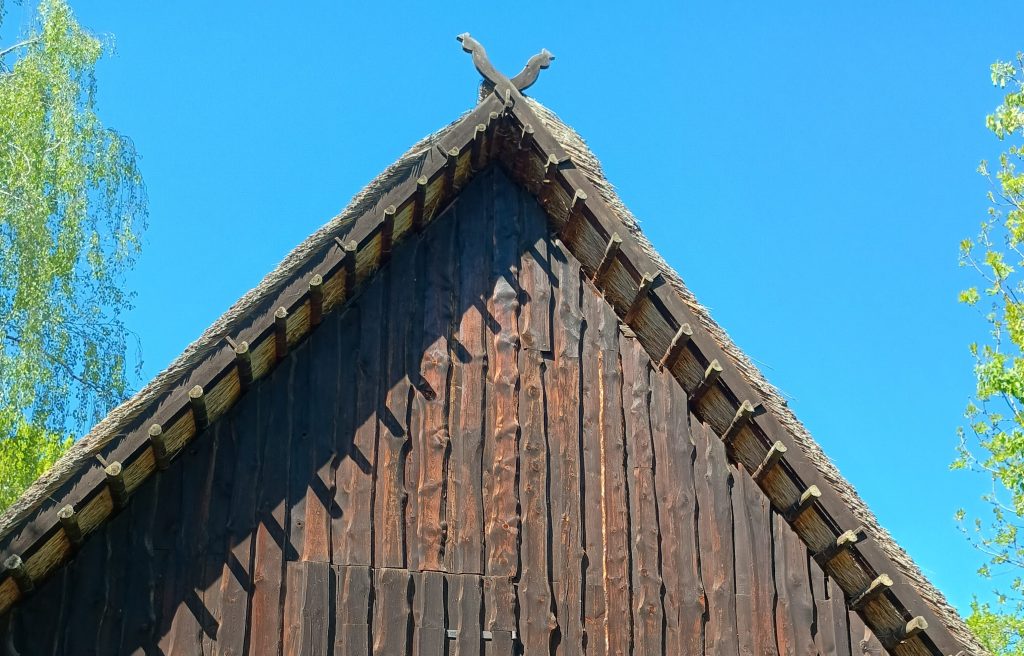
Imagine my delight then, when I discovered that my Wendish ancestors revered snakes, viewing them as portents of good fortune and protectors of the household. In Wendish folk belief, two snakes are said to live under the house of a Wendish family – Gospodar and Gosposar. The lives of the man and woman in the house are mortally linked to these two snakes. They are never seen when the heads of the household are alive, but when the man dies, the snake Gospodar will be found dead too, and the same is true for the woman and the snake Gosposar.
One of the best known Wendish folktales is that of the Snake King (or sometimes a queen). In Wendish, he is called Wužowy kral, and in German, he is Schlangenkönig. In some versions of the story, a foreign king tries to steal the golden crown of the snake, in others, the snake comes to a child, who feeds her and is rewarded with wealth.
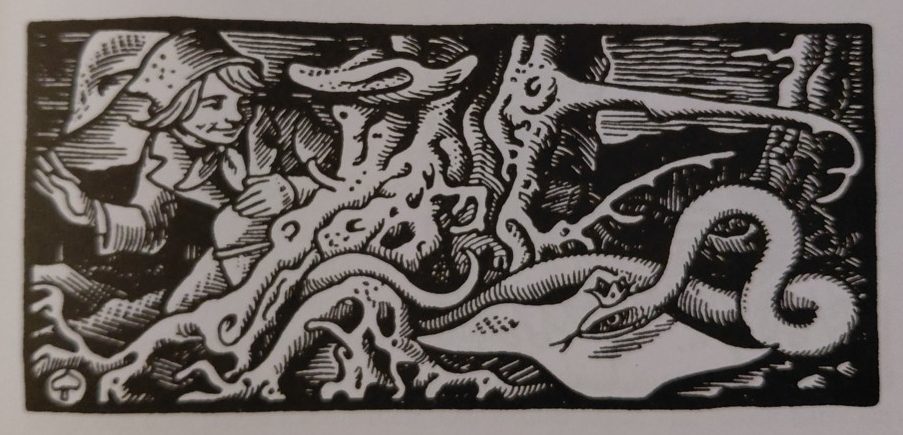
Other Slavic nations view the snake as one of the forms of Veles, god the underworld, wealth, poetry and magic. He builds a nest of black wool at the base of the Slavic world tree. I have seen some references to Veles in contemporary accounts as the ‘Slavic Satan’, but this is a crude analogy that does not describe the full character of this god, who was often prayed to for good fortune and wealth.
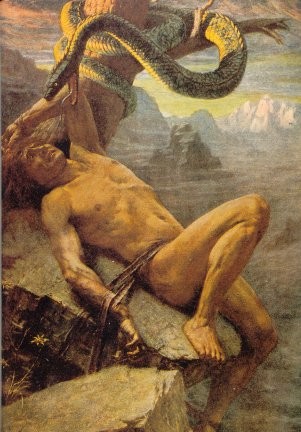
Perhaps the most well-known snake in European folklore is Jörmungandr, the Nordic world serpent, who encircles Midgard. The snake is closely associated with the trickster Loki, as Jörmungandr is one of his monstrous children. During Ragnarök, Loki’s children are unleashed and battle with the gods of Asgard. The snake also takes the form of Loki’s tormenter in the Norse myths. His punishment for contributing to the death of beloved Baldr was to be tied to a rock underneath a snake who drips venom onto his face.
Snake myths are to be found all across the world, depicted not only as a destroyer, but also as creator, as seen in the Rainbow Serpent creation stories of Australia First Nations lore.
If you’re interested in world snake mythology, I highly recommend the book Snake Talk by Tyson Yunkaporta and Megan Kelleher, who have travelled around the world looking at the similarities between snake lore in different cultures.
And the next time you meet a snake in your travels, be sure to say hello and treat him with respect.


Leave a Reply